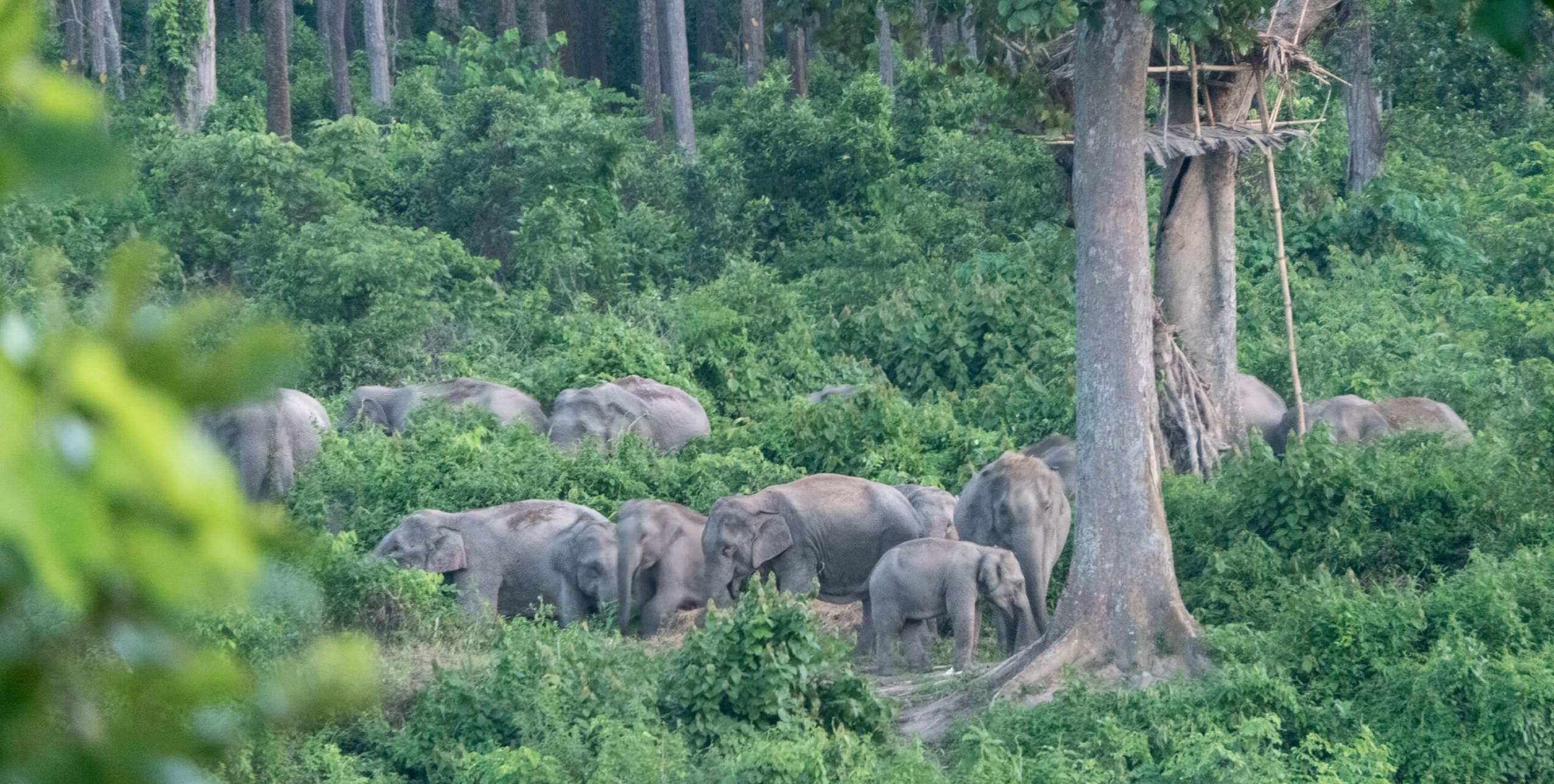
Due to depleting forest habitats and resources, we recognize the lack of food security as a pressing concern for elephants. To aid this problem, we have designed a program focusing mainly on identifying and mapping elephant migratory routes and subsequently improving the quality of those areas through the plantation of favourable grass species such as Tiger broom grass (Thysanolaena), Tora (Alpinia nigra), Napier (Cenchrus purpureus), and fruit trees such as elephants apples (Dillenia indica), and Jackfruit (Artocarpus heterophyllus) – to supplement the nutritional requirements of elephants. The logic behind this initiative is that by improving food security for wild elephants in their natural habitats, crop raiding behaviours in community crop fields will drastically be reduced.
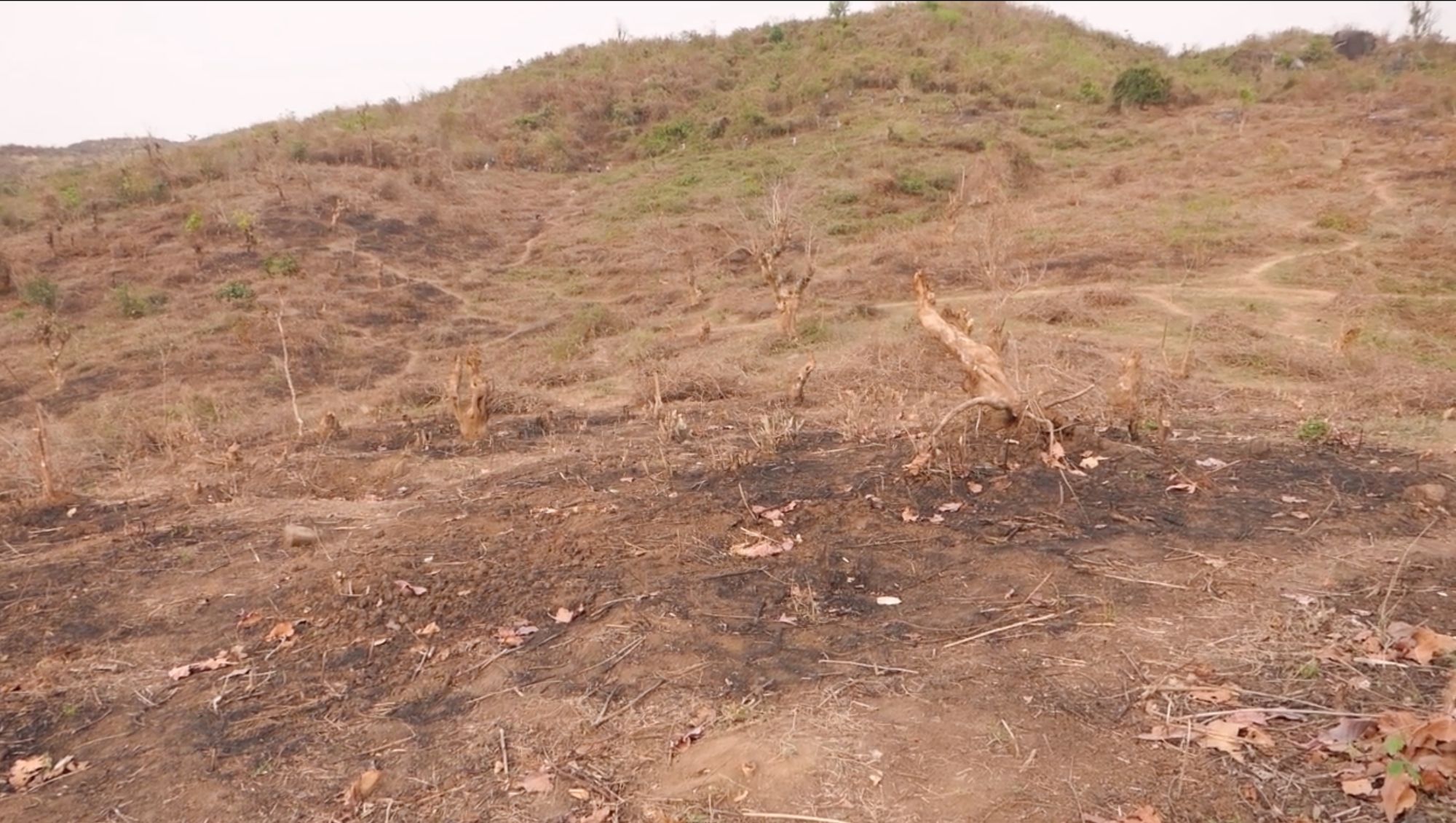
Before
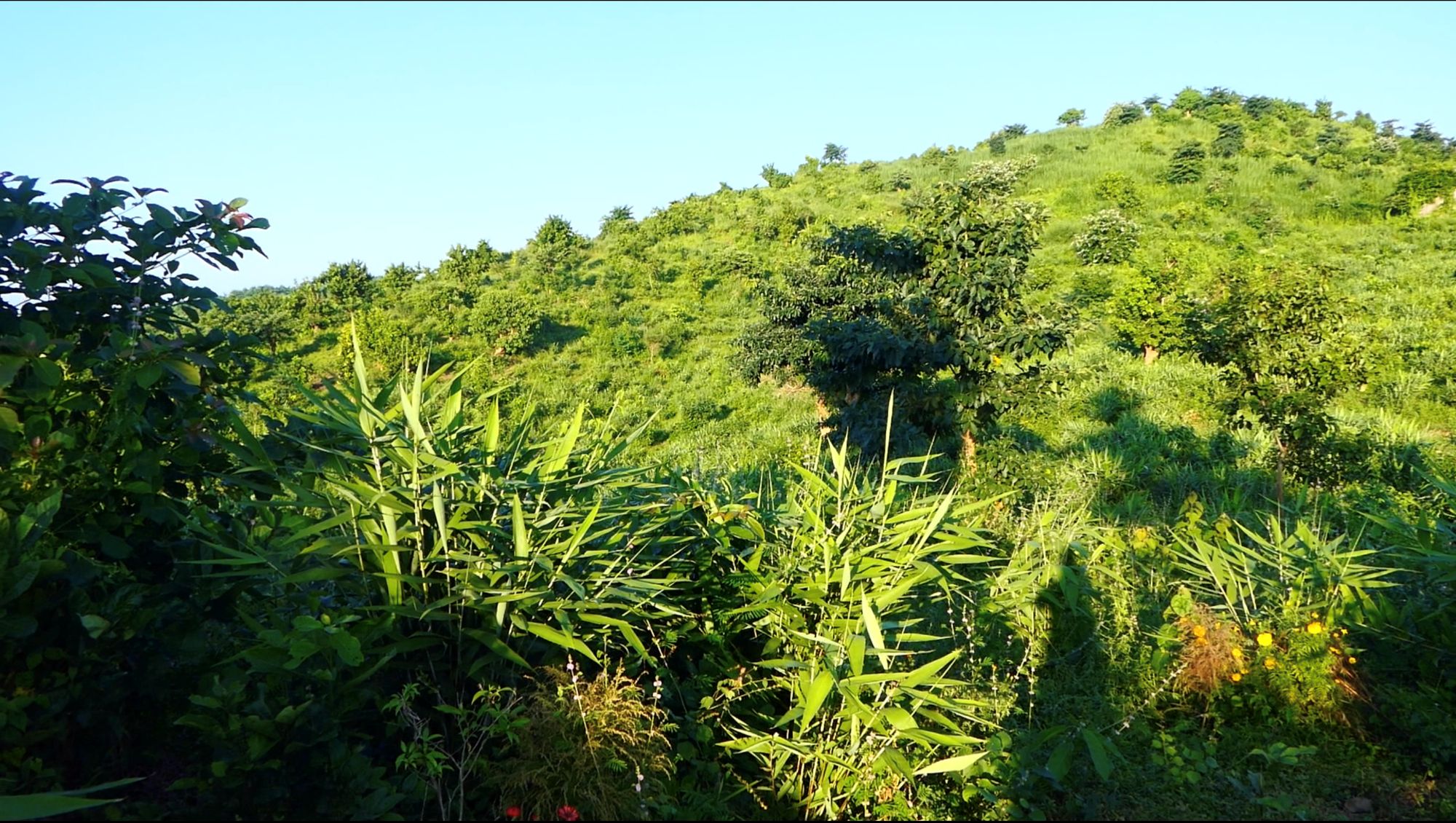
After
Hatikhuli and Nonoi, Assam
Hatikhuli, Assam is one of our primary and pioneering areas of operations where the habitat restoration program was first initiated. Hatikhuli, which falls under two districts – Golaghat and Karbi Anglong, is marked as an important and frequent migratory route for wild elephants. However, expansion of agricultural and industrial activities have left forest areas in Hatikhuli barren and depleted. To address this issue, we initiated a Napier grass (Pennisetum purpureum) and Tiger Broom grass (Thysanolaena) plantation program in Hatikhuli – which has been ongoing since May 2020. Both Napier and Tiger Broom grass are endemic to the area and are characterized as fast-growing grass species with high regenerative capacity.
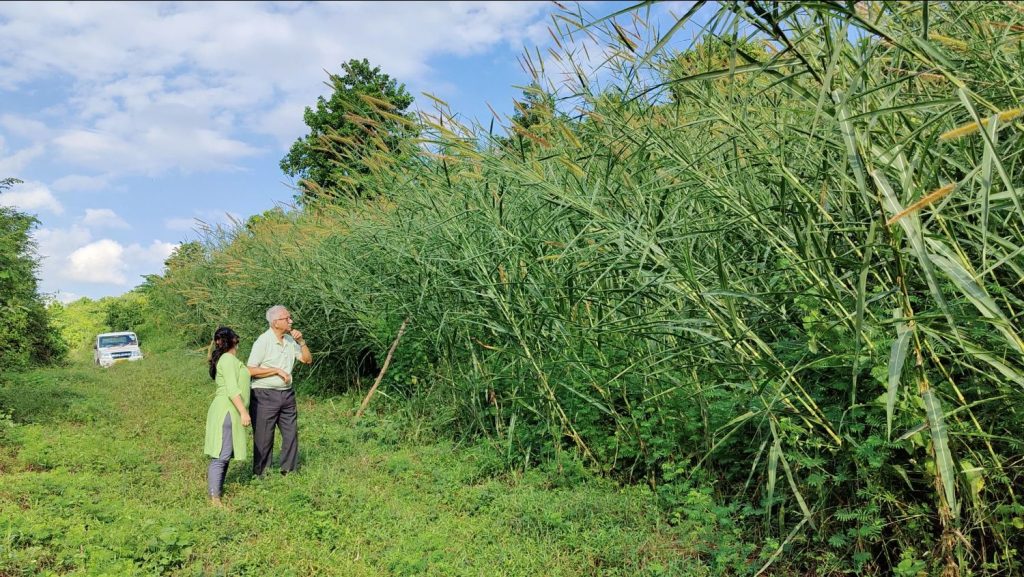
For this program, we planted 100,000 saplings of Napier and Tiger Broom grass (each) on approximately 70 acres of barren land in Hatikhuli. Based on our field observations and report, plantation of such fast-growing – yet favourable grass species – was a significant step forward towards supplementing food security and enriching the quality of elephant habitat in the area. Due to the program’s positive outcome in Hatikhuli, we extended our habitat enrichment model to Nonoi, Assam, which has also been identified as another important elephant migratory route in need of habitat restoration and preservation.